Plugging, also known as reverse current braking, is a technique used in forklifts to slow down or stop the machine by shifting the direction of travel—without using the brake pedal.
Instead of relying on traditional braking, the operator switches from forward to reverse (or vice versa), allowing the motor to generate an opposing force that quickly reduces speed.
This method is widely used in warehouse operations where fast stopping and efficient maneuvering are essential.
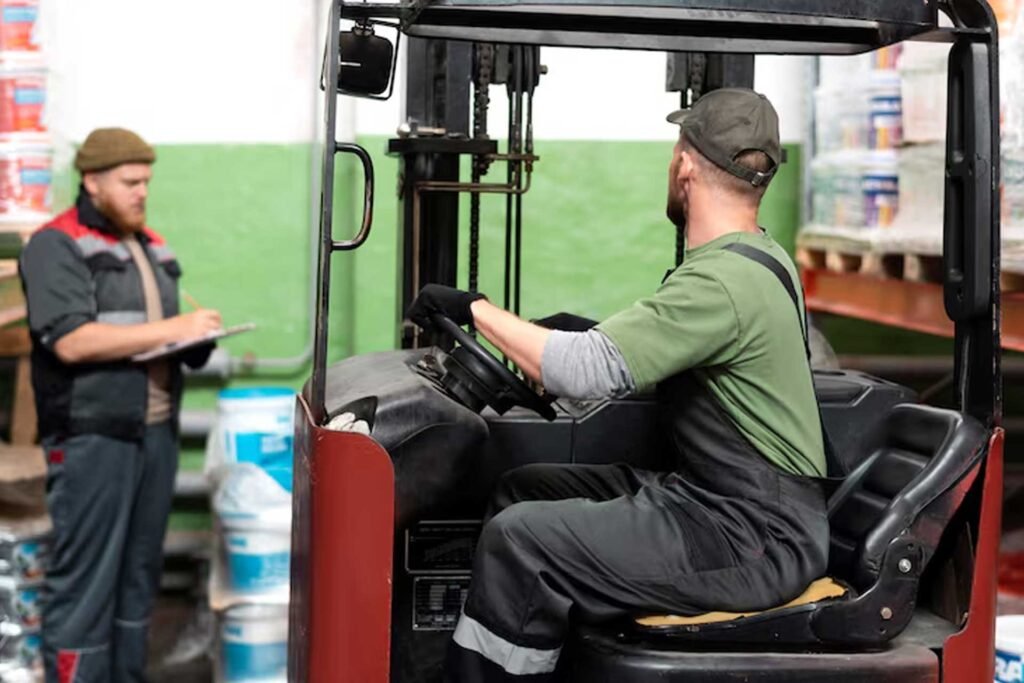
What Is Plugging on a Forklift
How Does Plugging Work on a Forklift?
Plugging works by reversing the motor’s direction to create resistance against the forklift’s current motion.
Here’s how the process works:
- The forklift is moving forward
- The operator shifts the control to reverse
- The motor generates force in the opposite direction
- The forklift slows down rapidly
- The system prevents immediate full reversal until speed is reduced
👉 Most modern forklifts include built-in plugging systems to ensure smooth and controlled deceleration.
Why Do Operators Use Plugging?
Plugging is commonly used because it improves operational efficiency, especially in fast-paced environments.
Key benefits include:
- Faster stopping time compared to traditional braking
- Quick direction changes for continuous workflow
- Improved productivity in high-traffic areas
- Better control in tight warehouse spaces
👉 In many indoor logistics operations, plugging becomes a standard driving technique.
Advantages of Plugging on a Forklift
✔ Increased Efficiency
Operators can move and stop more quickly, reducing downtime.
✔ Smoother Direction Changes
Ideal for operations that require frequent forward and reverse movement.
✔ Reduced Brake Usage
Less reliance on mechanical brakes can reduce brake wear over time.
Disadvantages of Plugging
While plugging is effective, it also has some drawbacks that operators and managers should consider:
❌ Increased Wear on Components
Frequent plugging can put extra stress on the motor and transmission system.
❌ Higher Energy Consumption
For electric forklifts, plugging uses more battery power.
❌ Requires Skilled Operation
Improper use can lead to rough handling or equipment damage.
👉 This is why proper operator training is essential.
Is Plugging Safe?
Plugging is safe when used correctly, but misuse can create risks.
Potential risks include:
- Loss of control if applied too aggressively
- Increased maintenance costs
- Damage to drivetrain components
- Load instability when carrying a heavy or elevated load — the sudden reversal of force can cause the load to shift, or reduce the truck's stability
Safety tips:
- Use plugging only when necessary
- Avoid sudden or excessive direction changes
- Keep the load low and light when plugging — avoid this technique with heavy or raised loads, where the added force reversal is more likely to cause instability
- Ensure operators are properly trained
- Follow manufacturer guidelines
- When in doubt, use the brake pedal instead
👉 When used properly, plugging is a safe and efficient braking method.
Which Forklifts Use Plugging?
Plugging is a feature specific to electric forklifts — it relies on reversing the electric motor's direction to generate resistance, which is why it doesn't apply to internal combustion (IC) engines in the same way.
Electric Forklifts
- Widely equipped with plugging systems as a standard control feature
- Ideal for indoor warehouse operations with frequent stop-and-go movement
Internal Combustion Forklifts
- Rely primarily on the service brake and, in some higher-end models, torque converter braking assistance for deceleration
- Do not use motor-reversal plugging, since the underlying mechanism doesn't exist in a combustion engine
Today, manufacturers like Hebei Maoxiang Technology Co., Ltd. integrate advanced control systems into their forklifts, ensuring smoother plugging performance and improved operational safety.
When Should You Use Plugging?
Plugging is especially useful in the following scenarios:
- Narrow aisle warehouses
- Frequent stop-and-go operations
- High-efficiency logistics environments
- Loading and unloading zones
👉 It is less suitable for long-distance travel or situations where gradual braking is preferred.
Plugging vs. Traditional Braking
| Feature | Plugging | Traditional Braking |
|---|---|---|
| Stopping speed | Fast | Moderate |
| Operator control | High (with skill) | Simple |
| Component wear | Higher (motor) | Higher (brakes) |
| Energy use | Higher | Lower |
👉 Both methods are important—skilled operators know when to use each.
Frequently Asked Questions
What is plugging braking on a forklift?
It is a braking method that slows the forklift by reversing motor direction instead of using the brake pedal.
Is plugging bad for forklifts?
Not necessarily. When used properly, it is effective, but excessive use can increase wear and energy consumption.
Do all forklifts have plugging?
Most electric forklifts do, while some internal combustion models may not.
What is the difference between plugging and braking?
Plugging uses motor resistance, while braking uses mechanical brake systems.
Final Thoughts
Plugging is an important forklift control technique designed to improve efficiency, maneuverability, and operational speed in demanding environments.
However, it should be used with proper training and awareness to avoid unnecessary wear and ensure safe operation.
Understanding how and when to use plugging can significantly improve both productivity and equipment lifespan.
Need Reliable Forklift Solutions?
Choosing the right forklift—and understanding how to operate it effectively—can make a big difference in your business performance.
At Hebei Maoxiang Technology Co., Ltd., we design our electric forklift control systems for smooth, predictable deceleration — including calibrated plugging response that reduces the wear and instability risks operators need to watch for.
Why Choose Our Electric Forklifts?
- Motor control systems tuned for smooth, gradual plugging response rather than abrupt force reversal
- Configurable acceleration and braking curves for narrow-aisle, stop-and-go operations
- CE-certified electric models from 0.6–5 tons
👉 Contact us today to learn how our control systems help operators use techniques like plugging safely and efficiently in high-frequency warehouse environments.