'Biggest' in forklifts almost always means one thing: load capacity, not physical size. A forklift's job is to move weight safely, so the industry benchmarks machines by how much they can lift — and the numbers at the top end are far beyond anything you'd see in a typical warehouse.

What Is the Biggest Forklift
The Actual Record: 85 Tons
The current Guinness World Record for forklift lifting capacity belongs to the Kalmar DCG850-12LB, rated to lift 85 metric tons (187,393 lbs) at a 1,200 mm load center. It's a pneumatic-tire counterbalance forklift built for continuous heavy industrial use — steel yards, ports, and renewable energy component handling (including offshore wind turbine parts) are typical jobs for a machine this size.
It's worth being precise here because this figure gets exaggerated a lot online. Some sources cite historical one-off machines built for special projects — most notably three custom Kalmar forklifts built in 1991 rated to 90 tonnes for a pipeline construction project in Libya — as if they represent the current standard. Those were purpose-built, non-production units for a single job, not machines you could order today. For a buyer's practical reference, 85 tons is the figure that matters: it's the top of what's commercially available and independently verified.
Capacity Tiers: What 'Big' Actually Means at Each Level
Forklift capacity spans a huge range, and the equipment looks completely different at each tier:
| Tier | Typical Capacity | What It Looks Like |
|---|---|---|
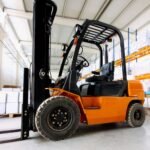
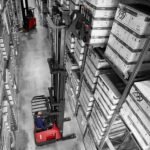
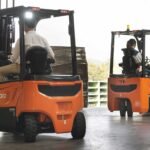
| Standard warehouse forklift | 1–5 tons | Counterbalance or reach truck, the type most people picture |
| Mid-size industrial forklift | 5–15 tons | Heavier counterbalance units for construction materials, machinery |
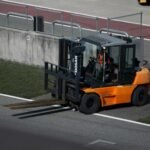
| Heavy-duty industrial forklift | 15–50 tons | Reinforced frame, diesel power, large counterweights |
| Super-heavy forklift | 50–85 tons | Purpose-built for steel, ports, and energy-sector components |
Above 50 tons, these aren't adapted versions of standard forklifts — they're a distinct engineering category, built by a small number of manufacturers (Kalmar, Konecranes, Taylor Machine Works, and a handful of others) that specialize almost exclusively in this weight class.
Where the '100-Ton Forklift' Confusion Comes From
Port and shipping terminology often gets lumped in with 'biggest forklift' searches, and this is where a lot of inflated numbers come from. Two related but distinct machine categories are frequently — and incorrectly — called forklifts:
Container handlers (also called top-lift or top-handler machines) use a spreader attachment to grip and lift shipping containers by their corner castings, rather than forks. They're built on a similar counterweight principle but are a different equipment category from a fork-based forklift.
Reach stackers combine a telescopic boom with a container spreader, giving them the ability to reach into multiple container rows — a design that has more in common with a mobile crane than a forklift.
Figures above 85 tons that you see online usually come from one-off custom builds, from port equipment such as container handlers and cranes that are rated differently, or from manufacturer claims that haven’t been independently verified.
Real-World Examples by Capacity
- 10-ton forklift — construction materials, precast concrete, heavy machinery components
- 25-ton forklift — steel coil and plate handling, industrial equipment installation
- 45–50 ton forklift — heavy machinery, large fabricated steel structures, port-adjacent yard work
- 85-ton forklift — the current top of the production market; steel mills, heavy fabrication yards, offshore energy component handling
What These Machines Are Used For
Heavy-capacity forklifts show up wherever standard equipment simply can't handle the weight involved:
- Steel and metal manufacturing — coils, plate stock, and fabricated structural steel
- Ports and shipping yards — general heavy cargo handling (container-specific work typically shifts to the specialized handlers described above)
- Construction and heavy engineering — precast concrete, large equipment, structural components
- Renewable energy — wind turbine components, particularly nacelles and tower sections, which routinely exceed the capacity of standard heavy-duty forklifts
Trade-offs at This Scale
Bigger capacity isn't free — heavy-duty and super-heavy forklifts come with real operational costs:
- High upfront cost — these are specialized, low-volume production machines, priced accordingly
- Large footprint requirements — turning radius and operating clearance scale with capacity; these machines need yard space, not warehouse aisles
- Higher fuel consumption — virtually all machines in this class are diesel-powered, and engine size scales with lifting capacity
- Specialized operator training — handling a 50+ ton counterbalance load safely requires experience well beyond standard forklift certification
Choosing the Right Capacity
Matching capacity to your actual heaviest load — with a safety margin, not lifting at the machine's absolute rated limit as routine practice — is the starting point:
- General heavy lifting (machinery, large components): 10–25 ton range
- Steel and industrial fabrication: 25–50 ton range
- Extreme loads (wind energy components, specialized heavy cargo): 50–85 ton range, from a small pool of specialist manufacturers
Oversizing wastes capital and creates unnecessary footprint and training requirements; undersizing creates a genuine safety problem. Getting an accurate weight and load-center measurement for your heaviest realistic load is worth doing properly before specifying equipment at this end of the market.
The Bottom Line
The 'biggest forklift' isn't a single machine — it's a capacity category topped out, as of the current Guinness World Record, by an 85-ton Kalmar unit. Above standard warehouse equipment, forklift selection becomes less about brand preference and more about matching a narrow set of specialist manufacturers to your actual heaviest load, floor conditions, and operating environment.
Most warehouses and factories need 1–5 tons, not 85. If your heaviest realistic load is in that range, see our counterbalance forklift guide and load center guide to size the truck correctly. For loads above 16 tons, you will need a specialist heavy-capacity manufacturer, and we’ll tell you honestly if that’s the case for your project.