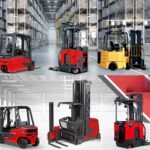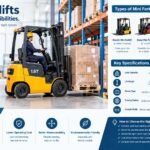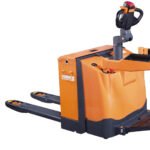
If you’ve ever walked through a warehouse, you’ve likely seen a compact machine lifting pallets to heights that a standard pallet jack could never reach, yet it isn’t quite as large as a traditional forklift. That machine is a pallet stacker.
For businesses looking to optimize their storage without investing in a fleet of heavy forklifts, understanding what a stacker is and how it works is essential. In this guide, Hebei Maoxiang Technology Co., Ltd. breaks down everything you need to know about pallet stackers.
What is a Stacker
1. Defining the Stacker: The Middle Ground of Material Handling
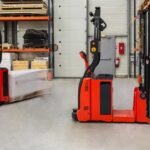
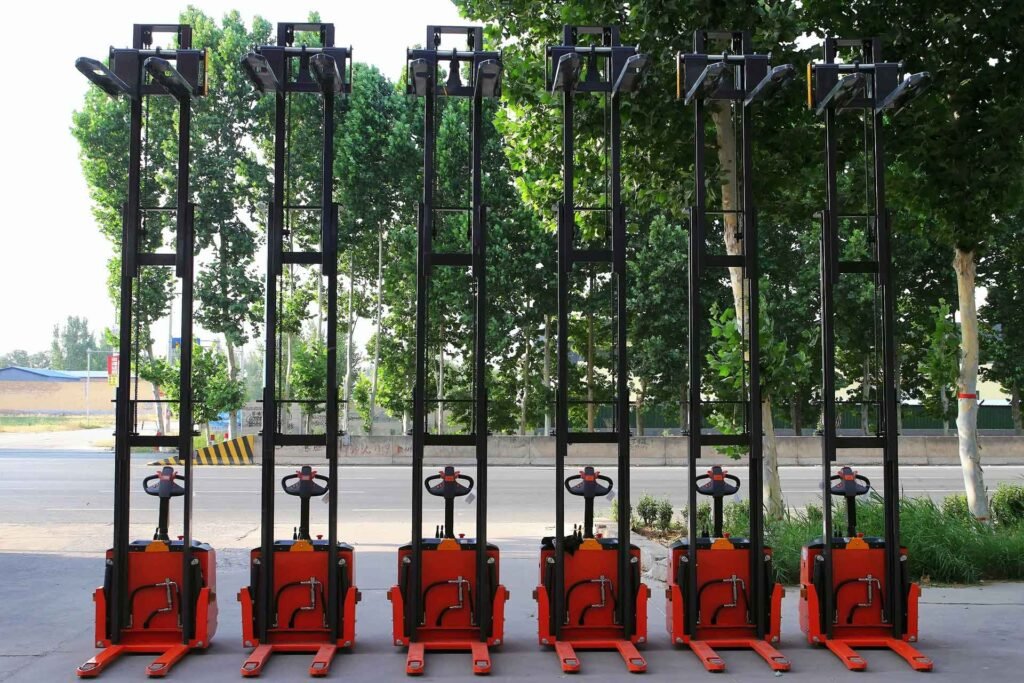
In simple terms, a stacker is a piece of material handling equipment designed to lift, move, and stack pallets. Think of it as a 'hybrid' between a manual pallet jack and a full-sized forklift.
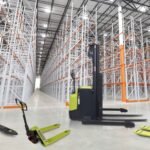
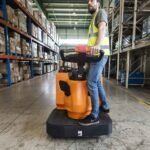
Unlike a pallet jack, which only lifts a load enough to clear the floor, a stacker features a mast that allows it to lift goods to various heights (typically between 1.6 to 5 meters). Most stackers are designed to be 'walkie' units, meaning the operator walks behind or beside the machine, though some models feature a platform for the operator to stand on.
2. Anatomy of a Pallet Stacker
To identify a stacker, look for these key visual components:
- The Mast: The vertical assembly that handles the lifting.
- The Forks: Two metal prongs that slide into a pallet.
- The Outriggers: Since most stackers don't have a heavy counterweight like a forklift, they use 'legs' (outriggers) at the base to provide stability and prevent tipping.
- The Handle/Tiller: Used by the operator to steer and control the lifting/lowering functions.
3. Common Types of Stackers
Depending on your warehouse needs and budget, Hebei Maoxiang Technology offers several variations:
Manual Pallet Stackers
- How it works: Lifting and moving are both done manually (usually via a foot pump or hand lever).
- Best for: Low-volume tasks and small budgets. It requires zero electricity and very little maintenance.
Semi-Electric Stackers
- How it works: The lifting is powered by a battery-driven motor, but the operator must push the machine manually to move it.
- Best for: Medium-duty tasks where lifting is frequent but travel distances are short.
Fully Electric Stackers
- How it works: Both lifting and driving are fully motorized.
- Best for: High-efficiency environments and large warehouses. These units significantly reduce operator fatigue and increase speed.
4. Stacker vs. Forklift: Which is Right for You?
Many sourcing managers ask: 'Why buy a stacker instead of a forklift?' Here are the main reasons to choose a stacker:
5. Why Choose Hebei Maoxiang Technology Stackers?
At Hebei Maoxiang Technology Co., Ltd., we specialize in exporting robust, reliable lifting equipment. Our stackers are engineered for the global market with a focus on:
- Compact Design: Perfect for narrow-aisle warehouses where space is at a premium.
- Safety First: Our electric models include emergency stop buttons, automatic braking, and speed limiters for high-altitude operations.
- Durability: We use high-grade steel for our masts and high-capacity batteries for our electric units, ensuring a long service life in demanding environments.
Conclusion: Small Machine, Big Impact
A pallet stacker is a versatile, cost-effective tool that can transform the efficiency of a small-to-medium-sized warehouse. Whether you are lifting pallets onto a mezzanine or loading a delivery truck, a stacker provides the reach you need without the bulk of a forklift.
Get a Quote on Your Next Stacker
Are you ready to upgrade your material handling? Hebei Maoxiang Technology provides a wide range of manual and electric stackers tailored to your specific needs.
Contact our export specialists today to find the perfect stacker for your business.