Many warehouse managers focus on one number when buying a walk-behind forklift: the purchase price.
At first glance, a lower-priced forklift seems like the smarter investment. After all, if two machines have similar lifting capacities and specifications, why pay more?
The reality is often very different.
A cheap walk-behind forklift can cost significantly more over its lifetime than a higher-quality model.
The hidden costs usually include:
- Faster wheel replacement
- Shorter battery life
- Poor ramp performance
- Increased downtime
- Limited spare parts availability
- Lower resale value
In many warehouses, these expenses exceed the original purchase price within just a few years.
Before choosing the lowest-cost forklift, it is important to understand the total cost of ownership (TCO).
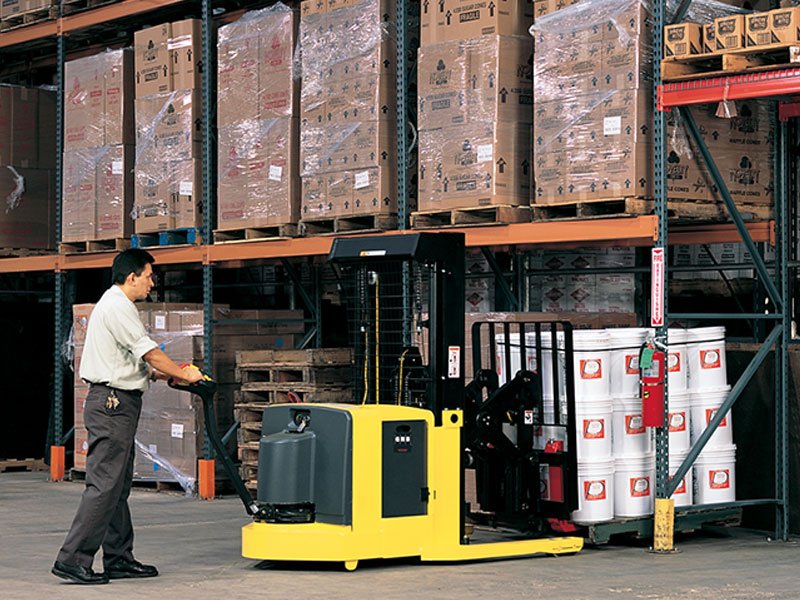
Hidden Costs of Walk Behind Forklifts
What Is Total Cost of Ownership (TCO)?
The purchase price of a forklift is only one part of the overall investment.
A walk-behind forklift may operate for five to ten years, and during that time, businesses must also pay for:
- Maintenance
- Repairs
- Battery replacement
- Wheel replacement
- Downtime
- Operator productivity losses
Many equipment managers estimate that the initial purchase price represents only a small portion of the machine's lifetime cost.
This is why experienced warehouse operators evaluate forklifts based on long-term value rather than the lowest upfront price.
Hidden Cost #1: Faster Wheel Wear and Replacement
One of the first areas where cheap forklifts become expensive is wheel replacement.
Many low-cost models use lower-grade polyurethane or rubber wheels to reduce manufacturing costs.
On smooth floors, this may not be obvious initially.
However, on real warehouse surfaces with:
- Expansion joints
- Cracked concrete
- Loading dock transitions
- Rough flooring
the wheels often wear much faster than expected.
Common signs include:
- Flat spots
- Edge damage
- Chunking
- Excessive vibration
A warehouse that replaces wheels every 6–12 months instead of every 2–3 years quickly loses any savings gained from a lower purchase price.
The bigger expense is often downtime while the forklift is being serviced.
Hidden Cost #2: Poor Ramp Performance
Many warehouses include ramps connecting different floor levels, loading docks, or mezzanine areas.
This is where quality differences become obvious.
Lower-cost walk-behind forklifts often have:
- Smaller drive motors
- Lower torque output
- Simpler controllers
- Less effective braking systems
As a result, operators may experience:
- Reduced climbing ability
- Wheel slip on ramps
- Slower travel speeds
- Increased battery consumption
In some cases, forklifts that perform well on a showroom floor struggle when carrying full loads on warehouse inclines.
A forklift that cannot handle daily operating conditions efficiently creates productivity losses every shift.
Hidden Cost #3: Higher Risk of Stability Problems
Safety rarely appears on a purchasing spreadsheet, but it can have the largest financial impact.
Walk-behind forklifts rely heavily on proper weight distribution and chassis design.
Cheaper models may cut costs by simplifying structural components or using lighter materials.
This can lead to:
- Greater load sway
- Reduced stability during turns
- Increased tipping risk
- More operator caution and slower operation
Even minor stability concerns often reduce productivity because operators naturally slow down when they lack confidence in the equipment.
More importantly, accidents can create costs far beyond any initial savings from a lower-priced machine.
Hidden Cost #4: Limited Spare Parts Availability
This is one of the most overlooked costs when purchasing warehouse equipment.
Many buyers focus on the machine itself but never ask about parts availability.
If a critical component fails, such as:
- Controller
- Drive motor
- Hydraulic pump
- Charger
- Display unit
how quickly can a replacement be delivered?
Some low-cost forklifts rely on components that are difficult to source internationally.
A part that takes six weeks to arrive can leave a forklift out of service for over a month.
The cost of downtime often exceeds the cost of the replacement part itself.
Before purchasing, always ask:
- Are spare parts stocked locally?
- What is the average lead time?
- How long is technical support available?
Hidden Cost #5: Reduced Operator Productivity
Not all forklifts feel the same to operate.
Higher-quality machines typically provide:
- Smoother acceleration
- More precise controls
- Better steering response
- Improved ergonomics
Lower-cost models may have:
- Abrupt acceleration
- Jerky stopping behavior
- Inconsistent lifting speed
- Excessive vibration
These issues may seem minor, but they affect productivity every day.
If an operator completes 5–10% fewer tasks per shift because the forklift is slower or more difficult to control, the long-term cost can be substantial.
Over several years, productivity losses often exceed the original difference in purchase price.
The Hidden Battery Cost
Battery quality is another area where inexpensive forklifts often cut corners.
Lower-quality battery systems may experience:
- Reduced runtime
- More charging cycles
- Faster capacity loss
- Earlier replacement requirements
For lithium-powered models, poor battery management systems (BMS) can accelerate battery degradation.
For lead-acid systems, lower-quality batteries often require more maintenance and replacement.
Battery replacement is one of the most expensive ownership costs for electric forklifts, making battery quality an important consideration.
Cheap Forklifts Usually Have Lower Resale Value
Most buyers focus only on the purchase price.
However, resale value affects the true cost of ownership.
After five years:
A well-maintained industrial-grade walk-behind forklift may retain a significant portion of its value.
A low-cost forklift may have little resale demand.
This means the actual ownership cost difference can be much larger than the original purchase price difference.
When calculating long-term ROI, resale value should always be considered.
When Is a Walk-Behind Forklift the Right Choice?
Walk-behind forklifts are excellent solutions for:
- Small warehouses
- Retail backrooms
- Light manufacturing facilities
- Short-distance pallet handling
- Narrow aisles
Compared with larger forklifts, they offer:
- Lower operating costs
- Compact dimensions
- Easier maneuverability
- Reduced maintenance requirements
However, selecting the right model is critical to achieving those benefits.
Three Questions Every Buyer Should Ask
Before purchasing any walk-behind forklift, ask these questions:
1. What Brand of Controller and Electrical Components Are Used?
Well-known components generally provide better reliability and parts support.
2. What Is the Expected Battery Life?
Ask for realistic operating hours, not only laboratory specifications.
3. How Quickly Are Spare Parts Available?
Parts availability can have a major impact on long-term operating costs.
These three questions often reveal more about equipment quality than the listed specifications.
The Cheapest Walk-Behind Forklift Is Rarely the Cheapest to Own
When evaluating a walk-behind forklift, purchase price should be only one part of the decision.
Wheel lifespan, battery performance, ramp capability, spare parts availability, operator productivity, and resale value often have a much greater impact on long-term operating costs.
For most warehouses, the best investment is not the cheapest forklift—it is the forklift that delivers the lowest total cost of ownership over its entire service life.
A quality walk-behind forklift may cost more upfront, but it often saves thousands of dollars through improved reliability, lower maintenance costs, and higher productivity.
Need Help Choosing the Right Walk-Behind Forklift?
Hebei Maoxiang Technology Co., Ltd. supplies walk-behind forklifts, electric stackers, pallet trucks, reach trucks, and warehouse handling equipment for customers worldwide.
Whether you need a compact stacker for narrow aisles or a heavy-duty electric forklift for intensive warehouse operations, our team can help you find the right solution for your application and budget.
Contact us today for expert advice and a competitive quotation.