If you're buying a used forklift, budgeting for parts, or just trying to plan maintenance, the year of manufacture matters more than most buyers realize. A '2018 model' advertised by a reseller isn't always the year it was actually built — and the difference affects everything from available parts to resale value. Here's how to actually find out, including how a few major brands encode the year directly into the serial number.
Start With the Data Plate
Every forklift has a data plate (sometimes called a nameplate or capacity plate), usually mounted:
- On the frame near the operator's seat or dashboard
- Inside the engine or battery compartment
- On the mast or overhead guard frame
This plate lists the manufacturer, model number, serial number, and rated capacity. Some manufacturers print the build year directly on the plate. Many don't — which is where the serial number comes in.
The Serial Number Is the Real Answer
For most brands, the manufacturing year isn't guessed from the model — it's encoded directly into the serial number. The catch is that every manufacturer uses a different system, so you need to know which brand's logic applies before the numbers mean anything.
Here's how two major brands actually do it, as a reference point for how these systems work:
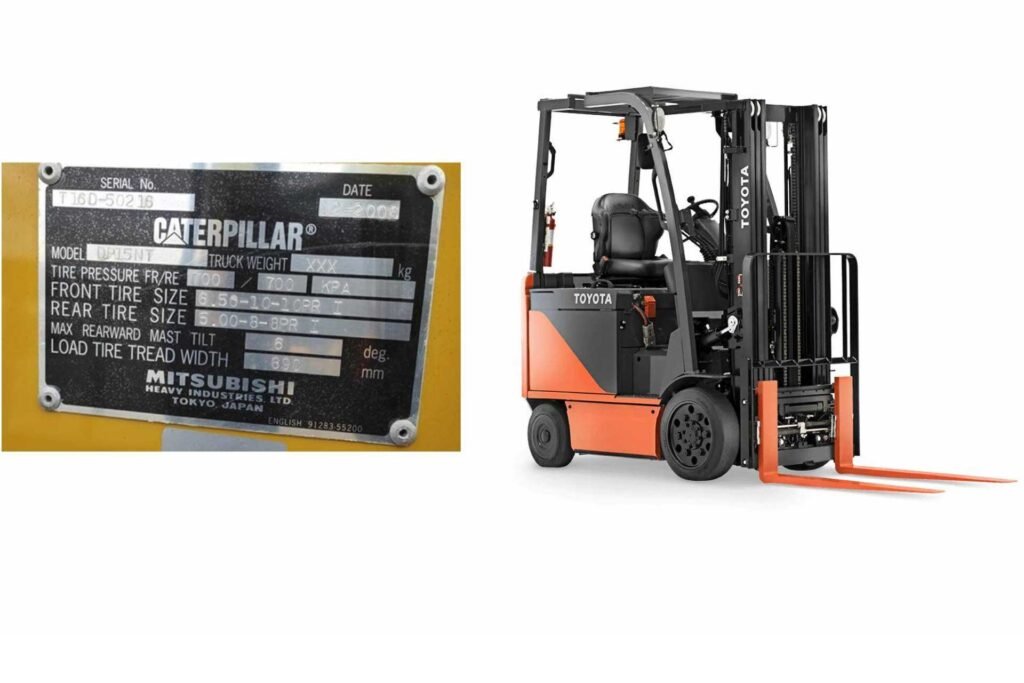
Toyota
Toyota forklift serial numbers end in a single letter that represents the year of manufacture. The cycle started with S for 1995 and moves forward alphabetically, skipping I, O, and Q (to avoid confusion with the numbers 1 and 0). So a serial number ending in a specific letter can be matched to a specific year — but because the alphabet eventually cycles back around, you also need a rough sense of the decade to avoid confusing, say, a 1996 unit with one built years later using the same letter.
Hyster
Hyster uses a four-part serial number: a design series code, a single letter identifying the manufacturing plant, a production sequence number, and — again — a single letter at the end representing the year. Hyster's year-letter system started with A for 1957 and also skips I, O, and Q. Unlike Toyota's cycle, Hyster's letter sequence repeats every 23 years, so the same letter reappears roughly two decades later. A serial number might look something like R177V03230X, where the design series, plant code, sequence number, and year letter each occupy their own segment.
The takeaway: these letter-based year codes only work if you know which brand's table to check them against, and even then, you often need to know the approximate decade to land on the right cycle. This is exactly why manufacturers don't expect owners to self-decode with total confidence — the serial number narrows things down, but confirming the exact year usually still requires the source below.
Confirm With the Manufacturer or an Authorized Dealer
Once you have the full serial number, the most reliable route is to send it directly to the manufacturer or an authorized dealer. They can check it against internal production records rather than a public decoding chart, which matters because:
- Public decoding charts are usually built by parts resellers, not the manufacturers themselves, and can contain gaps or errors for less common models
- Mid-production spec changes (engine, mast, hydraulics) sometimes aren't reflected in simplified public charts
- For repeat letter/number cycles (like Hyster's 23-year repeat), the manufacturer's own records remove the ambiguity entirely
Other Ways to Narrow It Down
If the data plate is missing or illegible — common on older, heavily used equipment — you can still make progress:
- Maintenance and purchase records: invoices, service logs, and inspection reports often list the manufacture date or at least the purchase date, which narrows the range.
- Frame-stamped serial numbers: many manufacturers stamp the serial number directly into the frame near the front wheels or under the mast, independent of the plate — useful if the plate itself has fallen off or corroded.
- Design and spec comparison: comparing visible design features (control layout, mast style, badge design) against a manufacturer's model history can narrow the era, though this is a rough estimate at best, not a substitute for the serial number.
Common Mistakes to Avoid
Confusing purchase year with manufacture year. A forklift can sit in dealer inventory for a year or more before being sold, so the invoice date isn't always the build date.
Assuming every brand uses the same code. A decoding chart for one manufacturer will give you a wrong (and confidently wrong) answer if applied to a different brand's serial number.
Relying on visual design alone. Manufacturers often run overlapping model generations for years, so two forklifts that look identical can be a decade apart.
Why This Actually Matters
Getting the year right isn't just trivia. It determines:
- Parts compatibility — engines, masts, and hydraulic components frequently change mid-production even within the same model name
- Resale and trade-in value — buyers and appraisers weight manufacture year heavily, separate from hours on the clock
- Compliance and safety updates — some safety features or service bulletins apply only to units built after a certain date
If you're evaluating a used forklift before purchase, get the serial number and manufacturer confirmation before you commit — not after.