Step 1: What Are You Moving? (This Sets the Capacity)
The single most important spec is load capacity. Get this wrong and nothing else matters.
How to calculate:
- Weigh your heaviest load. Not the average. The heaviest thing you will ever put on these forks. Add 20% safety margin.
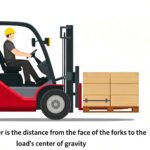
- Measure your longest pallet in the direction of fork entry. Divide by 2. That's your load center.
- Compare both numbers against forklift specs — capacity must be rated at a load center equal to or greater than yours.
Example:
- Heaviest pallet: 1,600 kg → +20% margin → 1,920 kg → round up to 2,000 kg capacity
- Longest pallet: 1,200 mm → load center 600 mm → buy a 600 mm load center truck (or a 500 mm truck and accept the 15% capacity loss)
Capacity guide by operation:
| Operation | Typical Capacity |
|---|---|
| Retail / small warehouse | 1.0–1.5 ton |
| Medium warehouse / distribution | 1.5–2.5 ton |
| Manufacturing / industrial | 2.5–3.5 ton |
| Heavy industry / steel | 4–7 ton |
| Port / container | 8–16 ton |
Step 2: Where Does It Work? (This Sets the Power Type)
| Electric | Diesel | LPG / Propane | |
|---|---|---|---|
| Indoor use | ✅ Best | ❌ Exhaust kills | ⚠️ With ventilation |
| Outdoor use | ⚠️ Limited (battery range) | ✅ Best | ✅ Good |
| Cold storage | ✅ (lithium better) | ❌ | ❌ |
| Noise | Silent | Loud | Medium |
| Emissions | Zero | High | Low |
| Refuel/charge time | 1–8 hours | 5 minutes | 5 minutes |
| Running cost per hour | Lowest | Highest fuel | Medium |
| Price range | $4,000–$40,000 | $5,000–$80,000 | $6,000–$50,000 |
Rules of thumb:
- 100% indoor → Electric. Period.
- 100% outdoor, heavy work → Diesel.
- Mixed indoor/outdoor → LPG (or electric if you can live with charging).
- Cold storage (-10°C or colder) → Electric with lithium battery.
Electric has one more decision inside it: lead-acid vs lithium.
| Lead-Acid | Lithium (LiFePO₄) | |
|---|---|---|
| Upfront cost | $800–$8,000 | $2,000–$18,000 |
| Lifespan | 3–5 years | 8–10 years |
| Charge time | 8–10h + cooldown | 1–2h |
| Watering | Weekly | Never |
| Battery room | Required | Not needed |
| Best for | 1 shift, budget-limited | Multi-shift, cold storage, new facility |
Step 3: How High and How Tight? (Mast + Aisle Width)
Mast height: Measure the top of your top rack beam. Add clearance:
- Forklift mast must lift 150–300 mm higher than the top beam
- Plus 100 mm clearance for the load on the forks
Example: Top beam at 4,500 mm → need 4,800–5,000 mm lift height.
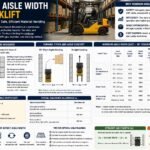
Aisle width: Measure the narrowest aisle your forklift must work in.
| Truck Type | Minimum Right-Angle Aisle |
|---|---|
| Stand-up 3-wheel electric (1–1.5 ton) | 2,400–2,800 mm |
| Standard counterbalance (2 ton) | 3,500–4,200 mm |
| Reach truck | 2,800–3,200 mm |
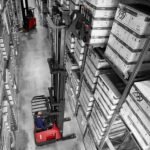
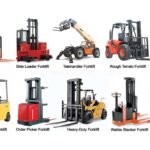
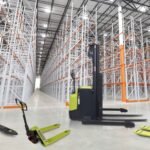
| Turret truck (VNA) | 1,650 mm |
| Rough terrain | 4,000–6,000 mm |
If your aisles are under 3,200 mm, a standard counterbalance won't fit. You need a stand-up, a reach truck, or a turret truck. Don't buy a counterbalance and hope it works — it won't.
Step 4: What's the Budget? New vs Used
| New | Used | |
|---|---|---|
| Price | $4,000–$50,000 | 40–70% of new |
| Warranty | 1–2 years | Usually none |
| Condition | Guaranteed | Inspect carefully |
| Data plate | Factory match | May not match (re-masted, re-tired, re-batteried) |
| Hidden risk | Low | Battery replacement, mast wear, controller failure |
Used forklift warning signs:
- Missing or illegible data plate → capacity unverifiable, walk away
- Battery replaced with lighter one → counterweight reduced, capacity is wrong
- Re-masted without re-rating → capacity label invalid
- Worn fork heels (use a wear gauge) → $400–$1,200 replacement
- Smoke, knocking, or oil leaks on diesel → engine rebuild money
If you buy used, budget 15–20% on top for immediate repairs. If the used price plus repairs exceeds 80% of new price, buy new.
Step 5: Where Do You Buy? Dealer vs Factory Direct
| Local Dealer | Factory Direct (Import) | |
|---|---|---|
| Price | Highest | Lowest (30–50% less) |
| Lead time | Immediate (in stock) | 20–35 days |
| Support | Local service | Remote + parts shipping |
| Warranty | Local labor included | Parts shipped, local labor arranged |
| Best for | 1-2 trucks, need it now, no in-house maintenance | Fleet purchases, planned replacements, budget-sensitive |
The factory-direct math: A 2-ton electric forklift costs $8,000–$12,000 from a local dealer. The same spec from a Chinese factory direct (like us): $5,000–$8,000 plus shipping. If you buy 3+ units, the savings pay for a spare truck.
If you buy factory direct, verify:
- CE / ISO certificates (real test house, not a screenshot)
- Load test report for your specific unit
- Actual battery brand and spec (not 'compatible with')
- Parts availability (can you get spares in 48 hours?)
- Reference customers in your country
Step 6: The 30-Point Checklist (Print This)
Before you sign:
- Load capacity matches your heaviest load + 20% margin
- Load center matches your pallet length
- Lift height exceeds your top rack beam by 300 mm+
- Aisle width fits the truck's right-angle stack requirement
- Power type matches your environment (indoor/outdoor/cold)
- Battery type chosen (lead-acid vs lithium) with charging plan
- Battery weight matches data plate (for electric)
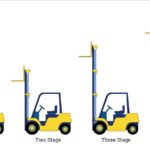
- Mast type correct (2-stage, 3-stage, free lift if container loading)
- Fork length at least 2/3 of pallet length
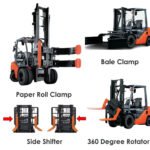
- Attachments accounted for (side-shifter reduces capacity 10–15%)
- Data plate present and legible
- Overhead guard installed and FOPS-rated
- Seat belt / OPS system functional
- Emergency stop button works
- Horn, lights, backup alarm work
- Brakes stop the truck within spec (test with load)
- Steering is responsive with no dead zone
- Hydraulics: no leaks at mast, tilt, carriage
- Mast extends and retracts smoothly at full height
- No unusual noises from drive motor or pump
- Tires: tread depth, wear pattern, no cracking
- Charger included or budgeted
- Spare parts availability confirmed (48-hour dispatch?)
- Warranty terms in writing (what's covered, labor or parts only?)
- Service manual and parts manual included
- Operator manual in your language
- CE / ISO documents provided
- Shipping cost and lead time in writing
- Payment terms (deposit %, balance on inspection or BL?)
- Reference customers in your industry you can contact
The Bottom Line
Buying a forklift is a 6-step process: capacity → power → mast/aisle → budget → source → inspect. Follow the steps in order and you can't go wrong, because each step eliminates options that would have failed later.
Don't let a salesperson skip you ahead. If someone quotes you a price before asking what you lift, what floor you work on, and how high your racks are — they're selling a machine, not a solution. Walk away.
We ask all six questions before quoting. Factory-direct pricing on electric, diesel, LPG, reach trucks, and rough terrain models. Send us your answers and we'll send you a spec that fits — with the calculations shown, not hidden.
Hebei Maoxiang Technology Co., Ltd.
- Web: forkliftlift.com
- FOB Tianjin | CE certified | 20–35 day lead | 80+ countries served