A Machine That Replaces Forklifts, Cranes, and Manual Handling
On many construction and industrial job sites, moving materials is rarely a single-step task.
Typically, it requires multiple tools:
- A forklift to load and transport materials
- A crane to lift materials to height or across obstacles
- Workers or scaffolding to position materials manually
A telehandler forklift (telescopic handler) changes this workflow completely.
It combines lifting, forward reach, and off-road mobility in one machine, allowing operators to pick up materials, extend outward, and place them precisely where needed.
In simple terms: a telehandler does not just lift materials—it positions them in 3D space.
However, most buyers still misunderstand what it actually is and how it works on real job sites.
What Is a Telehandler Forklift?
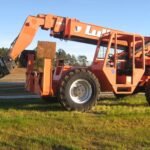
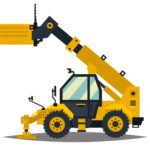
A telehandler (telescopic handler) is a material handling machine designed for lifting, extending, and placing loads across distance and height, especially in outdoor or rough terrain environments.
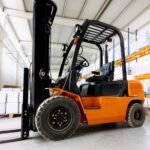
Unlike a standard forklift that lifts vertically, a telehandler uses a telescopic boom system that can extend forward like a crane arm while also lifting upward.
It is commonly used in:
- Construction sites
- Agriculture operations
- Industrial yards
- Remote or uneven terrain projects
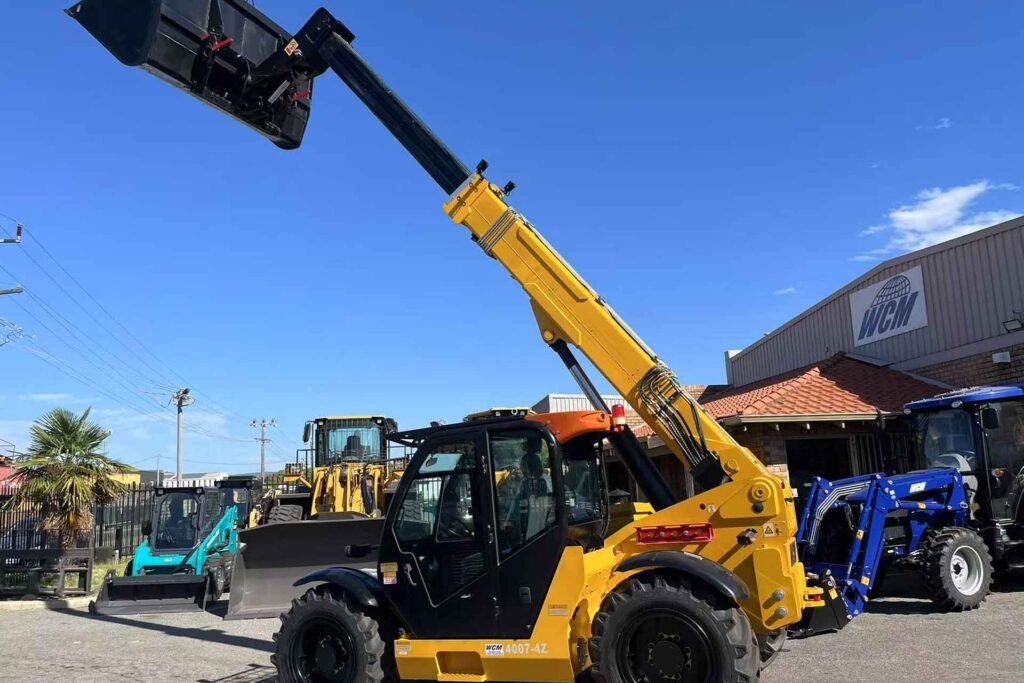
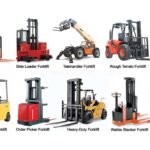
Telehandler Forklift
How a Telehandler Works
The working principle of a telehandler is based on three integrated systems: mobility, stabilization, and telescopic lifting.
1. Mobility: Moving Across Job Sites
A telehandler is built for site mobility, similar to a rough terrain forklift.
- 4WD systems are commonly used
- Large pneumatic tires provide traction on gravel, mud, and uneven ground
- Steering systems are designed for construction environments
This allows the machine to travel directly across job sites without needing paved surfaces.
2. Stabilization: Controlling Load Balance
Before lifting, the machine must maintain stability.
Depending on the model, stabilization is achieved through:
- Chassis weight distribution
- Frame leveling systems
- Optional outriggers (on some configurations)
Stability is critical because the boom extends far beyond the machine’s base footprint.
3. Telescopic Boom System: The Core Function
The defining feature of a telehandler is its hydraulic telescopic boom.
This boom:
- Extends forward horizontally
- Raises vertically
- Carries forks or attachments at the end
This dual movement allows the operator to:
- Reach over obstacles
- Lift materials to elevated floors
- Position loads far away from the machine base
This is the key difference from a standard forklift: it is not limited to vertical lifting.
4. Load Positioning
Once the boom reaches the required position:
- The operator adjusts height and reach
- The load is carefully placed
- The boom retracts and returns for the next cycle
This process allows precise placement of materials in areas that forklifts cannot access.
Why Telehandlers Exist: The Problem They Solve
Telehandlers were developed to solve a specific gap in material handling:
Forklifts cannot reach
- They are limited to vertical lifting
- They cannot place materials across distance or obstacles
Cranes are too large and slow
- Require setup time
- Expensive to operate
- Not practical for small or frequent lifts
The Solution
A telehandler fills the gap between a forklift and a crane.
It provides:
- Mobility of a forklift
- Reach capability of a crane
- Flexibility for construction environments
Telehandler vs Forklift vs Crane
| Equipment | Main Function | Strength | Limitation |
|---|---|---|---|
| Forklift | Vertical lifting | Fast, efficient, simple | No forward reach |
| Crane | Heavy lifting at height | Very high capacity | Expensive, slow setup |
| Telehandler | Lift + reach + mobility | Flexible and versatile | Lower capacity than cranes |
Real-World Applications
Construction Sites
Telehandlers are widely used to:
- Lift pallets of bricks, steel, and cement to upper floors
- Deliver materials inside building frames
- Replace scaffolding-based lifting in early construction phases
Agriculture
In agricultural environments, telehandlers are used for:
- Moving hay bales
- Handling feed and fertilizer bags
- Working in uneven field conditions
Industrial and Material Yards
They are also used for:
- Steel pipe handling
- Outdoor stacking operations
- Loading trucks in open yards
Remote or Infrastructure Projects
Telehandlers are especially useful where:
- No cranes are available
- Infrastructure is temporary
- Access roads are unpaved or incomplete
Key Limitations You Should Understand
Despite their versatility, telehandlers have important limitations.
1. Load Capacity Decreases With Reach
The further the boom extends, the lower the safe lifting capacity becomes.
This is one of the most critical operating principles and is often misunderstood by new operators.
2. Not a Replacement for Heavy Cranes
Telehandlers are not designed for:
- Extremely heavy lifts
- Precision industrial installation at height
3. Requires Skilled Operation
Operators must understand:
- Load balance changes during extension
- Terrain stability conditions
- Safe lifting angles and limits
4. Not Ideal for Tight Indoor Spaces
Due to:
- Large turning radius
- High clearance requirements
- Outdoor design focus
Key Specifications to Consider When Choosing a Telehandler
1. Maximum lift height
Common ranges:
- 6m / 12m / 17m / 20m+
This determines how tall a structure it can service.
2. Forward reach distance
This is often more important than lift height.
It determines:
- How far materials can be placed
- Whether obstacles can be cleared
3. Load capacity at different boom positions
Important rule:
Rated capacity applies only at minimum reach.
As the boom extends, capacity decreases significantly.
4. Terrain capability
- 2WD: suitable for firm ground
- 4WD: required for mud, gravel, and uneven terrain
Rent vs Buy Decision
Telehandlers are commonly used in project-based operations, making rental a major part of the market.
Rent if:
- Short-term construction projects (3–12 months)
- Seasonal agricultural work
- Temporary infrastructure projects
Buy if:
- Continuous construction operations
- Multiple ongoing job sites
- Daily lifting and placement tasks
Simple break-even estimate:
- Monthly rental: $3,000–$6,000
- Purchase price: $40,000–$120,000
Typical break-even point: 6–18 months depending on usage intensity.
How Telehandlers Fit Into a Complete Job Site Equipment System
A telehandler rarely works alone on a job site.
It is typically part of a broader equipment system:
- Telehandlers → lifting and placement
- Rough terrain forklifts → ground-level material movement
- Counterbalance forklifts → warehouse and loading bay operations
For example, equipment from Maoxiang (electric counterbalance forklifts from 0.6–5 tons, CE-certified and lithium-powered) is often used alongside telehandlers to handle indoor and paved-area material flow in the same project.
Final Takeaway
A telehandler forklift is not simply a “long-arm forklift.”
It is a multi-functional lifting and positioning machine designed to replace multiple equipment types in construction and outdoor logistics.
To choose correctly, you must evaluate:
- Required lift height
- Forward reach distance
- Terrain conditions
- Load behavior at full extension
- Whether the project is temporary or long-term
When used correctly, a telehandler can replace cranes and forklifts in many job site operations.
When misunderstood, it becomes underutilized—or unsafe.