In modern warehousing, floor space is the most expensive thing you can waste. Narrow aisle (NA) and very narrow aisle (VNA) equipment lets you store more pallets in the same building — but only if the truck you pick actually matches your aisle width, rack height, floor, and load. This guide is the overview: what each type does, where it fits, and which detailed guide to read next.
You'll also see these trucks called 'high reach forklifts.' That's a general term, not a technical class — it simply refers to any truck built to lift loads to greater heights than a standard counterbalance forklift, usually in high-rack storage. The types below are what that term covers.
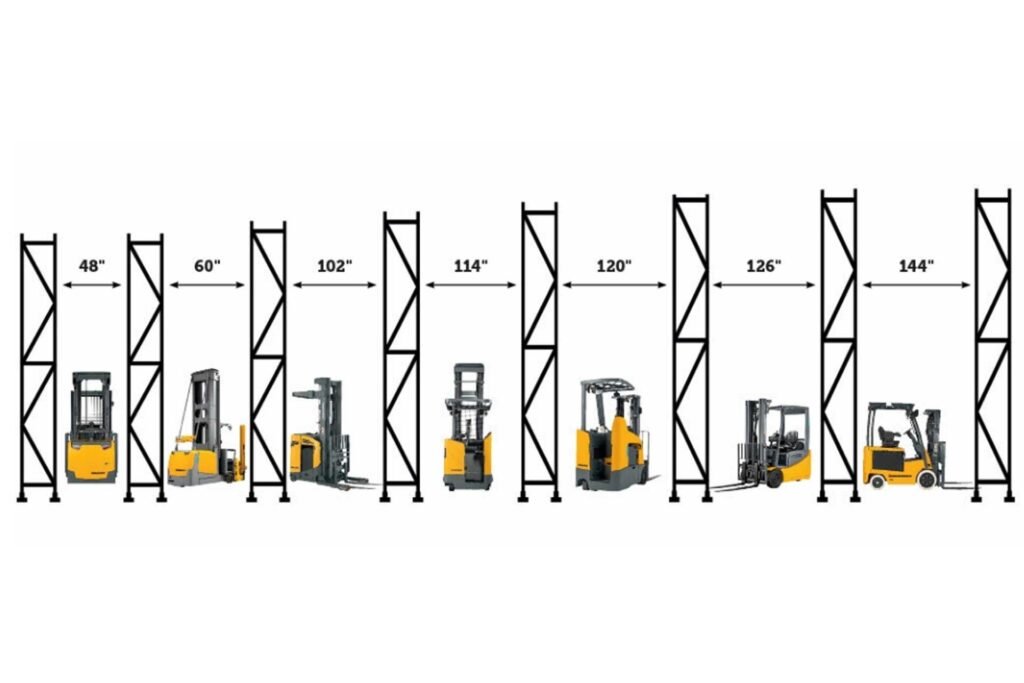
Types of Narrow Aisle Forklifts
Quick Comparison
| Type | Typical Aisle Width | Typical Lift Height | Best For |
|---|---|---|---|
| Reach truck | 2.5–3.0 m (8–10 ft) | 7.5–13.5 m (25–45 ft) | General high-density pallet storage |
| VNA turret truck | 1.6–1.8 m (about 5–6 ft) | Often 11–15 m (35–50 ft), higher on specialized builds | Maximum storage density |
| Order picker | 2.5–3.0 m (8–10 ft) | Platform height 6–10.5 m (20–35 ft) | Piece and case picking |
| Side loader | Depends on model and load length | Medium | Long loads: timber, pipe, steel bar |
| Articulated (pivot steer) | 1.9–2.1 m | Medium | Mixed indoor/outdoor, one truck for racks and trailers |
Figures are typical planning ranges. Exact numbers vary by model, mast, and pallet size — always get the working aisle width ('aisle width to stack and travel') from the manufacturer for your pallet, and compare it to your measured aisles, not the drawing.
1. Reach Trucks: The Standard Narrow-Aisle Truck
A reach truck keeps its body in the aisle while a pantograph or moving mast extends the forks into the rack, which is why it needs far less aisle than a counterbalance truck. Capacity typically tops out around 2,500–4,500 lbs, and rated capacity drops with lift height, so always check the load chart at your actual top level.
Watch out for: floor flatness. At heights above 20–30 ft, reach trucks need a very flat floor, and an old or uneven one causes load sway at height. Measure the floor before you specify the truck. They are indoor-only equipment.
Read next: Reach Truck: Uses, Benefits & Buying Guide
2. VNA Turret Trucks: When Density Is the Priority
When even a reach truck is too wide, a turret truck keeps the chassis pointing straight down the aisle while a rotating fork head picks from racks on either side. Aisles can drop to roughly 1.6–1.8 m. They typically run on wire or rail guidance, which makes them a facility investment rather than just a truck purchase, and they come in man-up (picking at height) and man-down (pallet handling) versions. Floor requirements are usually the strictest of any type here, so confirm flatness with the manufacturer.
Read next: What Is a Turret Forklift? (VNA Truck Explained)
3. Order Pickers: Picking at Height
An order picker raises the operator platform together with the forks so workers can pick individual items or cases from shelving. It suits e-commerce and parts warehouses with high SKU counts, and it is the wrong tool for whole-pallet moves.
Safety is a purchase requirement here, not an option. Because the operator is elevated, fall protection (a full-body harness and anchor points) is part of the system cost, and operators need training specific to this class of truck — see OSHA forklift requirements.
4. Side Loaders: Long and Bulky Loads
Timber, pipe, and steel bar are awkward for a forward-facing truck in a narrow aisle. A side loader carries the load alongside the chassis, so the load runs lengthwise along the aisle instead of needing room to rotate into it. The aisle width you need depends on the model and the length of your loads: [填入你们侧叉车的实际最小通道宽度范围].
5. Articulated (Pivot Steer) Forklifts: One Truck for Racks and Yard
An articulated truck bends at a central joint so the front section can turn while the body stays straight. It can work narrow aisles around 1.9–2.1 m and also load and unload trailers outside, which can replace both a reach truck and a counterbalance truck in mixed operations. Electric versions suit indoor use; diesel or LPG versions are for outdoor and yard work.
Read next: What Is a Bendi Forklift? (Articulated Forklift Explained)
How to Choose
- Measure your actual aisles, not the layout drawing. Tolerances and clutter near rack ends can take half a foot off a nominal 10-ft aisle.
- Calculate the lift height you really need: top beam height plus pallet height plus clearance to clear the beam.
- Check rated capacity at that height, not just at ground level.
- Assess the floor before choosing any high-lift truck.
- Decide on guidance, power, and training together. VNA needs wire or rail guidance; high-intensity multi-shift work usually points to lithium-ion; and each truck class needs its own operator certification.
For the wider decision across all indoor truck types, see Warehouse Forklift: Best Types for Indoor Use.
Where Maoxiang Fits
We build reach trucks, order pickers, turret trucks, and articulated forklifts, and we size them to your layout rather than sell from a fixed catalog:
- Turret / VNA trucks: aisles as narrow as 1.8 m, wire or rail guidance, lift heights up to 18.5 m
- Articulated forklifts: aisles as narrow as 1.9 m, 1.5–3 ton capacity, electric and diesel/LPG options
- Reach trucks and order pickers: configured to your rack height, pallet size, and shift pattern
(Confirm model availability, camera and speed-reduction options, and CE coverage per model before quoting.)
Send us your aisle width, rack height, pallet dimensions, and typical load weight, and we'll tell you which type fits and what a realistic configuration looks like.