Reach trucks often lose stability when crossing warehouse expansion joints because their design combines small load wheels, a forward-reaching mast, and a high center of gravity. Even a small floor gap can create vibration, load sway, mast oscillation, and temporary traction loss.
In many modern warehouses, operators notice:
- Mast shaking when crossing floor joints
- Load swaying at height
- Reduced travel speed
- Wheel impacts
- Fork vibration
- Increased operator discomfort
Most people blame the forklift.
However, the real problem is usually the interaction between reach truck design and warehouse floor expansion joints.
This issue becomes more serious in:
- High-bay warehouses
- Narrow aisle operations
- Automated distribution centers
- Cold storage facilities
- High-lift applications above 6 meters
As warehouse racking continues to get taller, expansion joints are becoming one of the most overlooked causes of reach truck instability.
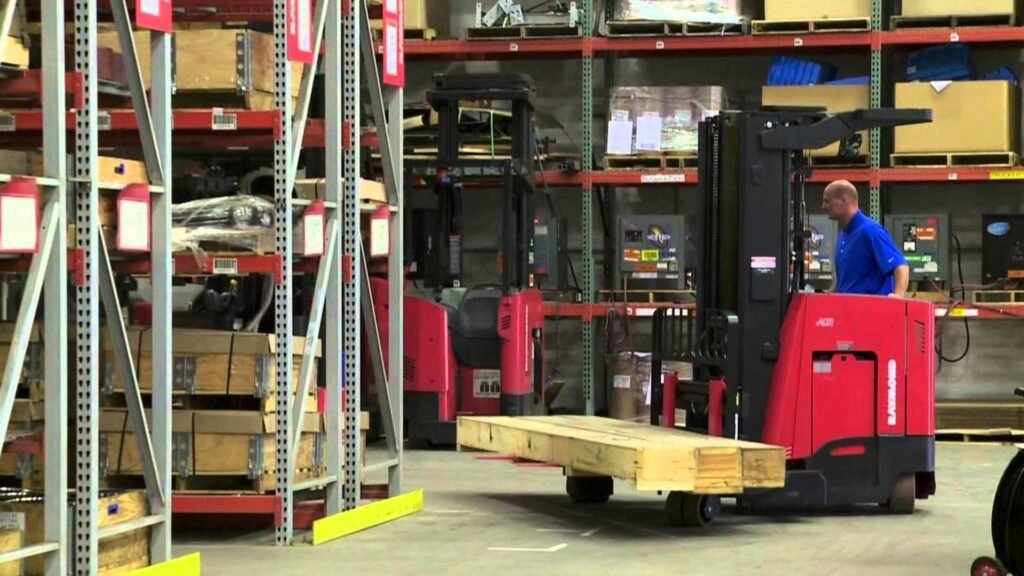
Why Reach Trucks Lose Stability on Expansion Joints
What Are Warehouse Expansion Joints?
Expansion joints are intentional gaps built into concrete floors.
Their purpose is to:
- Allow concrete expansion and contraction
- Prevent floor cracking
- Accommodate temperature changes
- Reduce structural stress
Large warehouses often contain hundreds of meters of expansion joints.
Although they may appear small, these joints create sudden elevation changes that directly affect forklift stability.
For standard counterbalance forklifts, the effect is usually minor.
For reach trucks, the impact can be significant.
Why Reach Trucks Are More Sensitive Than Counterbalance Forklifts
Reach trucks are designed differently from conventional forklifts.
Key characteristics include:
- Small polyurethane load wheels
- Narrow chassis
- Extended mast design
- Forward-reaching forks
- High lifting heights
These features improve warehouse efficiency but reduce tolerance to floor imperfections.
When a reach truck crosses an expansion joint, even a small gap can generate vibration throughout the entire structure.
Small Wheels Create Higher Impact Forces
One of the biggest reasons is wheel size.
Reach trucks typically use:
- Small load wheels
- Small drive wheels
- Polyurethane wheel materials
Compared with larger pneumatic or cushion tires, small wheels cannot absorb impacts effectively.
When crossing an expansion joint:
- The wheel drops into the gap
- The wheel climbs out again
- Shock loads transfer directly into the chassis
The result is:
- Vibration
- Wheel impact stress
- Operator discomfort
- Reduced stability
Forward Load Position Magnifies Instability
The reach mechanism moves the load away from the forklift body.
This improves stacking efficiency but creates a longer leverage arm.
When crossing a floor joint:
- The mast receives a sudden shock
- The load begins oscillating
- The force is amplified by the extended reach
A small floor irregularity at ground level can create significant movement at the load position.
The higher the lift height, the greater the effect.
High Lift Heights Make the Problem Worse
At ground level, vibration may appear minor.
At 8–12 meters of lift height, the same vibration becomes much more noticeable.
Operators often report:
'The load keeps moving long after crossing the joint.'
This happens because:
- Mast flexibility increases with height
- Load sway becomes amplified
- Oscillation takes longer to settle
The higher the pallet is raised, the more sensitive the truck becomes to floor imperfections.
Mast Resonance Can Occur
One of the least discussed issues is mast resonance.
Every mast has a natural vibration frequency.
When a reach truck repeatedly crosses expansion joints:
- Vibrations can accumulate
- Oscillations can increase
- The mast may continue moving after the impact
This phenomenon becomes especially noticeable in:
- High-speed operations
- Narrow aisle warehouses
- High-lift storage systems
Repeated resonance increases operator stress and reduces positioning accuracy.
Load Sway Reduces Productivity
Many warehouse managers focus on travel speed.
However, load stabilization often has a greater impact on productivity.
When a reach truck crosses expansion joints:
- Operators slow down
- Loads sway
- Positioning takes longer
The operator must wait for the load to stabilize before placing a pallet.
Over hundreds of cycles per day, these delays can significantly reduce warehouse throughput.
Polyurethane Wheels Amplify the Problem
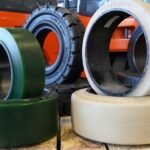
Most reach trucks use polyurethane wheels because they:
- Roll efficiently
- Produce low noise
- Work well on smooth floors
However, PU wheels provide very little shock absorption.
When crossing expansion joints:
- Impacts transfer directly into the truck frame
- Vibrations become more noticeable
- Wheel wear increases
Expansion Joints Accelerate Wheel Wear
Many operators notice rapid wheel deterioration near frequently crossed joints.
Common symptoms include:
- Edge chipping
- Flat spots
- Wheel cracking
- Bearing wear
Repeated impacts create concentrated stress on the same wheel locations.
In high-traffic warehouse aisles, expansion joints often become wheel-damage hotspots.
Traction Loss Can Occur During Joint Crossings
Another overlooked issue is temporary traction loss.
When a wheel encounters an expansion joint:
- Contact area decreases
- Weight distribution changes
- Wheel grip may reduce momentarily
This can create:
- Minor slipping
- Speed fluctuations
- Steering corrections
The effect becomes more noticeable when:
- Floors are dusty
- Surfaces are wet
- Loads are heavy
Cold Storage Warehouses Face Additional Challenges
Cold storage facilities often experience:
- Larger concrete movement
- Wider floor joints
- Frost buildup
- Harder wheel materials
Polyurethane wheels become less flexible at low temperatures.
As a result:
- Impacts feel harsher
- Vibrations increase
- Stability decreases
This is one reason why reach truck operators in cold storage often report more severe shaking problems.
Why Automated Warehouses Notice This Problem More
Modern automated warehouses typically feature:
- Higher racks
- Narrower aisles
- Faster cycle times
- More precise positioning requirements
These conditions amplify every stability issue.
Even small mast movements can:
- Trigger safety slowdowns
- Delay pallet placement
- Reduce productivity
As warehouse automation increases, floor quality becomes more important than ever.
Warning Signs That Expansion Joints Are Affecting Reach Truck Stability
Common indicators include:
Excessive Mast Movement
The mast continues shaking after crossing floor joints.
Load Sway at Height
Pallets move noticeably when traveling.
Operators Slow Down Near Certain Areas
Drivers instinctively reduce speed at specific joints.
Frequent Wheel Damage
Load wheels wear unusually fast.
Positioning Delays
Operators wait for loads to stabilize before stacking.
Increased Operator Fatigue
Continuous vibration creates discomfort during long shifts.
How Warehouses Can Reduce the Problem
Improve Joint Maintenance
Damaged joints should be:
- Repaired
- Filled properly
- Leveled regularly
Smooth transitions significantly reduce vibration.
Use Higher-Quality Wheel Materials
Certain wheel compounds provide:
- Better shock absorption
- Lower vibration transfer
- Longer service life
Reduce Travel Speed Near Problem Areas
Controlled speed limits can reduce:
- Impact forces
- Mast oscillation
- Wheel damage
Optimize Warehouse Floor Quality
High-bay warehouses require tighter floor flatness tolerances than standard facilities.
Floor quality directly affects:
- Stability
- Productivity
- Equipment lifespan
Consider Suspension and Damping Technologies
Some modern reach trucks include:
- Mast damping systems
- Electronic stability control
- Vibration reduction features
These technologies help reduce the effects of expansion joints.
The Hidden Cost of Expansion Joints
Most warehouse operators view expansion joints as a floor maintenance issue.
In reality, they can increase:
- Wheel replacement costs
- Mast wear
- Operator fatigue
- Productivity losses
- Maintenance downtime
As warehouses become taller and more automated, the financial impact becomes increasingly significant.
Conclusion
Reach trucks lose stability on expansion joints because their small wheels, forward-reaching mast design, and high lifting heights amplify the effects of floor gaps and surface irregularities.
The biggest causes include:
- Small polyurethane wheels
- Forward load positioning
- High mast flexibility
- Load sway
- Wheel impact forces
- Mast resonance
While expansion joints are necessary for warehouse floor construction, they can become a major source of vibration, instability, and productivity loss if not properly maintained.
For modern high-bay warehouses, floor quality is no longer just a construction issue—it is a critical factor in reach truck performance, safety, and operating efficiency.