The Hidden Cost of Walking in Your Warehouse
In many large warehouses, a picker can walk 12–15 miles per shift. That’s not an exaggeration—it’s a documented reality in high-volume distribution centers.
The problem?
Walking doesn’t create value.
In fact, it can consume up to 60% of total picking time, turning labor into your biggest inefficiency. When your operation is stuck below 80 picks per hour, you’re not just slow—you’re paying extra to stay that way.
An order picker forklift solves this problem by reversing the workflow:
Instead of workers walking to the product, the machine brings them there—and lifts them to it.
But here’s the truth most articles won’t tell you:
An order picker can double your picking speed—or become your biggest safety risk if used in the wrong environment.
This guide will help you understand exactly when it’s the right investment—and when it’s not.
order picker forklift
What Is an Order Picker Forklift?
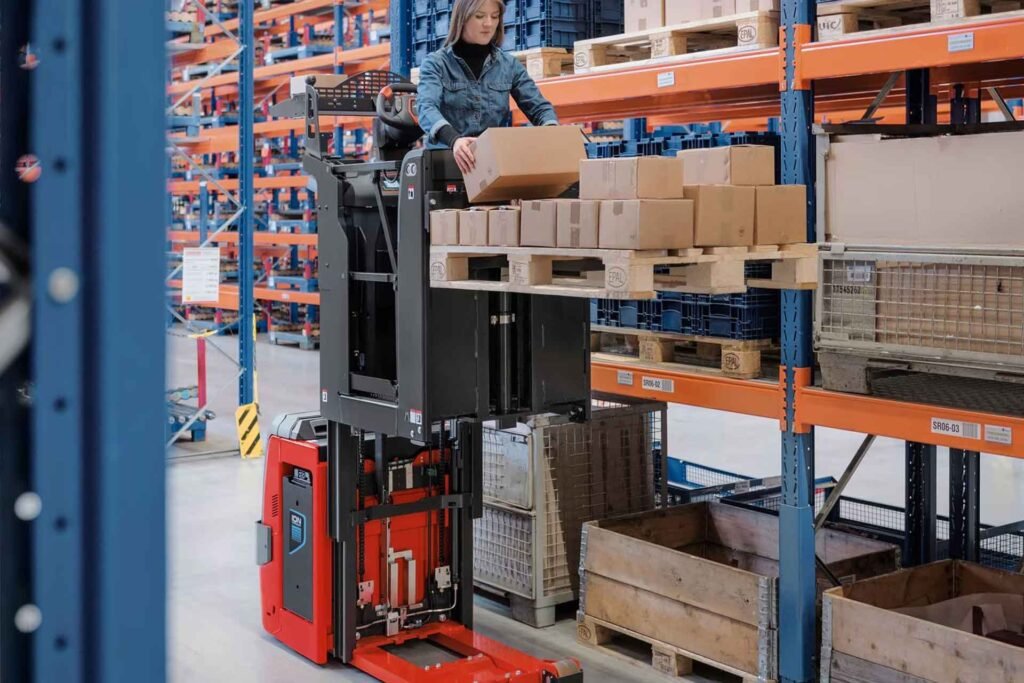
An order picker forklift is a specialized warehouse truck designed for piece picking (not pallet handling).
Its defining feature is simple—but critical:
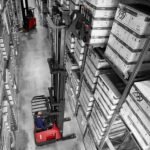
The operator platform rises together with the forks.
Unlike traditional forklifts, where the operator stays on the ground, an order picker lifts both the worker and the load to the required shelf level.
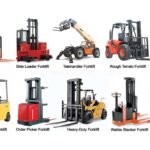
Order Picker vs. Other Warehouse Equipment
Many buyers confuse order pickers with other lifting equipment. Here’s a clear breakdown:
| Equipment | Operator Position | Main Use | Lift Height | Is It Right for You? |
|---|---|---|---|---|
| Order Picker | Rises with platform | Piece picking | 15–35 ft | ✅ E-commerce / retail warehouses |
| Reach Truck | Stays on ground | Pallet storage/retrieval | 25–45 ft | ✅ Pallet-based operations |
| Walkie Stacker | Walking | Low-level pallet movement | 10–15 ft | ✅ Small warehouses |
👉 If your operation is pallet in / pallet out, an order picker is the wrong machine.
What Problem Does an Order Picker Actually Solve?
The rise of e-commerce has fundamentally changed warehouse operations.
Ten years ago:
- Most shipments = full pallets
Today:
- Orders = multiple SKUs, small quantities
- One order may require picking 30–50 different items
The Bottleneck: Walking, Not Picking
In manual operations:
- Workers spend more time moving than picking
- Paths are inefficient
- Fatigue reduces speed over time
How Order Pickers Improve Efficiency
With an order picker:
- Operator drives directly to pick locations
- Platform lifts to exact shelf height
- Items are picked and placed on onboard pallet
- Move to next location
Real Productivity Comparison
| Method | Picks per Hour |
|---|---|
| Manual walking picking | 60–80 |
| Order picker | 100–150 |
| Order picker + optimized WMS | 140–180 |
In large warehouses (5,000+ SKUs), manual picking can drop to 40–60 picks/hour, while order pickers still maintain 100+ picks/hour.
👉 That’s a 50–100% productivity increase.
Safety Risks: The Part Most Guides Ignore
Let’s be direct:
Order pickers are among the highest injury-risk forklifts in warehouse operations.
Why?
- Operators work 15–30 feet above ground
- Platforms are partially open
- Workers must reach, scan, and move simultaneously
- Distraction happens at height—not on the ground
OSHA Requirements (Not Optional)
- Full body harness must be worn at all times
- Harness must be attached to an approved anchor point
- Operators must be trained and certified
- Equipment must be inspected before each use
Most Common Accidents
- Falls → Often fatal or severe (missing/incorrect harness use)
- Crushing injuries → Between platform and racking
- Tip-overs → Due to uneven floors or overloading
- Falling objects → Injuring workers below
Many warehouses treat harnesses as a compliance item—but in reality, they are the last line of defense against fatal accidents.
Safety Cost You Must Budget
- Full body harness: $80–$200 per unit
- Training & certification: $150–$300 per operator
- Inspection & safety procedures
👉 These are not optional add-ons—they are part of the real cost of ownership.
Types of Order Picker Forklifts
By Lift Height
Low-Level Order Picker
- Up to ~6 ft
- Fast-moving, ground-level picking
- Common in retail replenishment
Mid-Level Order Picker
- 6–15 ft
- Most common configuration
- Ideal for mixed inventory warehouses
High-Level Order Picker
- 15–35 ft
- Used in high-density racking
- Standard in large e-commerce fulfillment centers
- Highest efficiency—but also highest risk
By Operation Mode
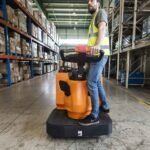
Walkie Order Picker
- Operator walks alongside
- Lower cost, flexible
- Suitable for small warehouses
Rider Order Picker
- Operator rides on platform
- Much higher productivity
- Standard for large operations
The Real Efficiency Driver: Your WMS System
Here’s what most articles miss:
The biggest efficiency gain doesn’t come from the machine—it comes from how you use it.
Without optimization:
- Operators follow order sequence
- Movement becomes zig-zag
- Travel time explodes
With WMS optimization:
- Batch picking (multiple orders at once)
- Optimized picking routes
- Logical location sequencing
Efficiency Impact
| Setup | Picks per Hour |
|---|---|
| No optimization | ~100 |
| WMS + batch picking | 140–180 |
👉 That’s a 40–80% difference—without changing the machine.
In many cases, WMS improvements deliver more ROI than upgrading equipment alone.
Real-World Use Cases
E-commerce Fulfillment Centers
- High SKU count (10,000+)
- Multi-line orders
- ✅ Order pickers are essential
Retail Distribution Warehouses
- Frequent replenishment
- Mid-level picking
- ✅ Common use case
Traditional Wholesale Warehouses
- Mostly pallet-based
- ❌ Order pickers often unnecessary
Buying Guide: 6 Things to Confirm Before You Purchase
1. Picking Type
- Pallets → ❌ Not suitable
- Piece picking → ✅ Good fit
2. Required Lift Height
Formula:
Shelf height + ~2 ft (operator reach)
3. Aisle Width
- Standard: 8–10 ft
- Narrow aisle: 6–8 ft
👉 Measure your narrowest aisle, not average.
4. Floor Condition
High-level picking requires:
- Floor flatness: FF ≥ 50
5. Safety Equipment (Mandatory Budget)
- Harness systems
- Training programs
- Inspection protocols
6. WMS Capability
Your system should support:
- Batch picking
- Location sequencing
- Route optimization
If not, include upgrade cost in ROI analysis.
When an Order Picker Is NOT the Right Choice
- Pallet-based operations → Use reach trucks
- Small warehouses → Manual picking may be cheaper
- High staff turnover → Training costs too high
- Extremely high volume → Consider automation systems
Where Order Pickers Fit in Your Overall Fleet
Order pickers solve one specific problem:
high-level piece picking.
But a complete warehouse requires multiple equipment types.
For example:
- Receiving & shipping → counterbalance forklifts
- Pallet transport → pallet trucks or reach trucks
- Picking → order pickers
Companies like Maoxiang provide electric counterbalance forklifts (0.6–5 ton, CE-certified, lithium-powered) that typically work alongside order pickers to complete the full warehouse workflow.
Final Takeaway
An order picker forklift is not just a productivity tool—it’s a strategic decision.
- In the right environment → 50–100% efficiency gain
- With proper systems → even higher ROI
- Without safety discipline → serious risk
Before you invest, make sure you’ve answered:
✔ Is your operation truly piece-picking driven?
✔ Is your warehouse layout compatible?
✔ Is your WMS ready to support it?
✔ Have you budgeted for safety—not just equipment?
Get these right, and an order picker can transform your warehouse. Get them wrong, and it becomes an expensive—and potentially dangerous—mistake.