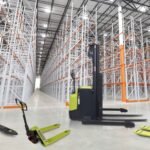
Reach trucks are designed for smooth indoor warehouse floors, not rough or uneven surfaces. When used on damaged concrete, cracked floors, uneven joints, or poorly maintained warehouse surfaces, reach trucks often experience instability, excessive vibration, steering problems, and premature component failure.
The most common reasons reach trucks fail on uneven warehouse floors include:
- Small load wheels and limited suspension
- High mast vibration during lifting
- Increased battery consumption
- Premature wheel wear
- Reduced lifting stability at height
- Sensor and electronic system damage
- Operator safety risks
Unlike traditional counterbalance forklifts, reach trucks use narrow chassis designs and smaller wheels optimized for flat warehouse environments. Even minor floor imperfections can significantly affect stability and performance.
Before purchasing a reach truck, warehouse operators should evaluate:
- Floor flatness
- Expansion joints
- Surface cracks
- Ramp transitions
- Floor load quality
- Aisle conditions
In many warehouses, poor floor conditions — not the reach truck itself — are the real cause of operational problems.
Why Reach Trucks Are More Sensitive Than Standard Forklifts
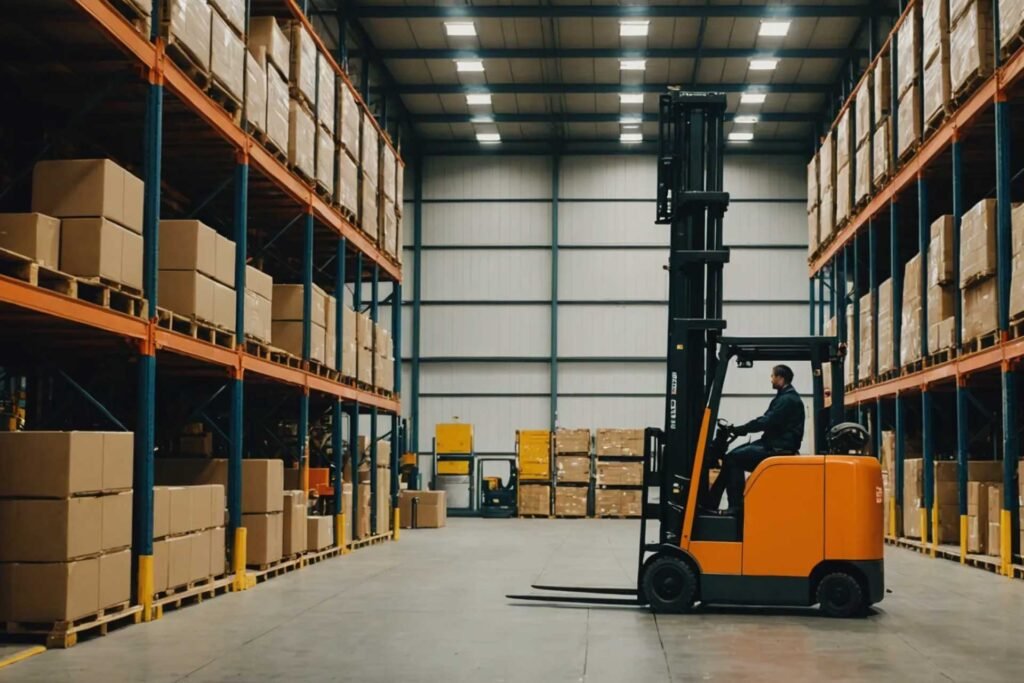
Reach trucks are built for:
- Narrow aisle warehouses
- High stacking operations
- Indoor logistics
- Smooth concrete floors
Their design prioritizes:
- Compact turning radius
- High lift heights
- Precise maneuverability
To achieve this, reach trucks typically use:
- Smaller wheels
- Narrow wheelbases
- Lightweight chassis designs
While these features improve warehouse efficiency, they also make reach trucks much more sensitive to floor quality than standard forklifts.
Why Reach Trucks Fail on Uneven Warehouse Floors
Small Wheels Cannot Absorb Floor Impact Effectively
One of the biggest weaknesses of reach trucks is wheel size.
Most reach trucks use:
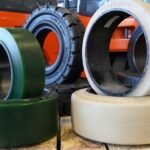
- Small polyurethane load wheels
- Hard industrial tires
- Minimal shock absorption
On smooth epoxy floors, this works well.
But on uneven warehouse floors, small wheels transmit vibration directly into:
- The mast
- The chassis
- The steering system
- Electronic components
- The operator compartment
Even small floor defects can create major operational instability.
Expansion Joints Cause Severe Mast Vibration
Old warehouses often contain:
- Damaged expansion joints
- Uneven concrete sections
- Floor settlement
- Surface cracks
When a reach truck crosses these areas while lifting loads, the mast begins vibrating aggressively.
This becomes especially dangerous at higher lifting heights.
Common problems include:
- Load swaying
- Reduced stacking accuracy
- Operator instability
- Sensor alarms
- Slower operating speeds
In high-rack warehouses, mast vibration can significantly reduce productivity and safety.
Uneven Floors Increase Battery Consumption
Many warehouse operators do not realize that poor floor conditions also affect energy efficiency.
On rough floors:
- Rolling resistance increases
- Drive motors work harder
- Steering systems experience greater load
As a result:
- Battery drain accelerates
- Runtime becomes shorter
- Charging frequency increases
This is especially noticeable with lithium battery reach trucks operating in large warehouses.
In some facilities, operators incorrectly blame the battery when the real issue is excessive rolling resistance caused by poor floors.
Reach Truck Electronics Are Vulnerable to Vibration Damage
Modern reach trucks depend heavily on:
- Electronic steering systems
- Height sensors
- Stability monitoring systems
- Wire harnesses
- Display controllers
Continuous vibration from uneven floors can damage these systems over time.
Common issues include:
- Sensor calibration errors
- Loose electrical connectors
- Display failures
- Fault alarms
- Intermittent operating problems
Electronic failures become more common in warehouses with poor floor maintenance.
Operator Fatigue Increases on Rough Floors
Reach truck operators spend long hours handling loads at height.
On uneven warehouse floors, vibration exposure increases significantly.
This can cause:
- Operator fatigue
- Reduced concentration
- Lower productivity
- Increased accident risk
Rough floors also force operators to:
- Drive slower
- Adjust steering constantly
- Reduce lifting speed
Over time, warehouse efficiency decreases even if the forklift itself remains operational.
High Lift Heights Magnify Small Floor Problems
A key reason reach trucks struggle on uneven floors is leverage effect.
At low lift heights, small floor vibrations may appear manageable.
But when lifting loads:
- 8 meters
- 10 meters
- 12 meters
Even tiny chassis movement becomes amplified at the top of the mast.
This can lead to:
- Load oscillation
- Difficult pallet positioning
- Rack impact risk
- Reduced operator confidence
The higher the lift height, the more important floor flatness becomes.
Uneven Floors Accelerate Wheel and Bearing Wear
Rough warehouse floors place extra stress on:
- Load wheels
- Bearings
- Steering assemblies
- Mast rollers
Common maintenance problems include:
- Cracked polyurethane wheels
- Bearing failure
- Loose mast components
- Steering wear
This increases:
- Maintenance costs
- Downtime
- Parts replacement frequency
Many warehouses mistakenly assume the reach truck has poor durability when the actual issue is unsuitable floor conditions.
Reach Trucks Perform Best on Super-Flat Floors
Modern narrow aisle warehouses are often built with:
- Laser-leveled concrete
- Smooth epoxy surfaces
- Strict floor flatness standards
This is because reach trucks require:
- Stable travel surfaces
- Minimal vibration
- Predictable wheel contact
High-lift warehouse equipment is engineered around floor precision.
Without proper floor quality, performance drops significantly.
Signs Your Warehouse Floor Is Causing Reach Truck Problems
Common warning signs include:
- Excessive mast shaking
- Frequent wheel replacement
- Battery runtime reduction
- Steering instability
- Operator complaints about vibration
- Load positioning difficulty
- Increased electronic faults
If these issues appear repeatedly, the warehouse floor may be the real problem.
How to Reduce Reach Truck Problems on Uneven Floors
Improve Floor Flatness
Repair:
- Cracks
- Expansion joints
- Uneven concrete
- Surface settlement
Use Proper Wheel Materials
Choose wheel compounds designed for:
- Rougher floors
- Heavy-duty operation
- Better shock absorption
Reduce Travel Speed
Lower speeds reduce:
- Vibration impact
- Mast oscillation
- Wheel wear
Inspect Warehouse Floors Regularly
Monitor:
- Surface wear
- Joint damage
- Concrete deterioration
- Drainage problems
Choose the Right Forklift Type
In severely uneven environments, a counterbalance forklift may perform better than a reach truck.
Reach trucks are optimized for smooth indoor warehouse operations, not rough industrial floors.
Conclusion
Reach trucks are highly efficient warehouse forklifts, but they are extremely sensitive to floor conditions.
Uneven warehouse floors can cause:
- Mast instability
- Excessive vibration
- Battery inefficiency
- Electronic failures
- Premature wheel wear
- Reduced operator safety
In many warehouses, the real reason reach trucks “fail” is not poor forklift quality — it is poor floor quality.
Before investing in reach trucks, businesses should carefully evaluate warehouse floor flatness, surface condition, and long-term floor maintenance to ensure safe and efficient operation.