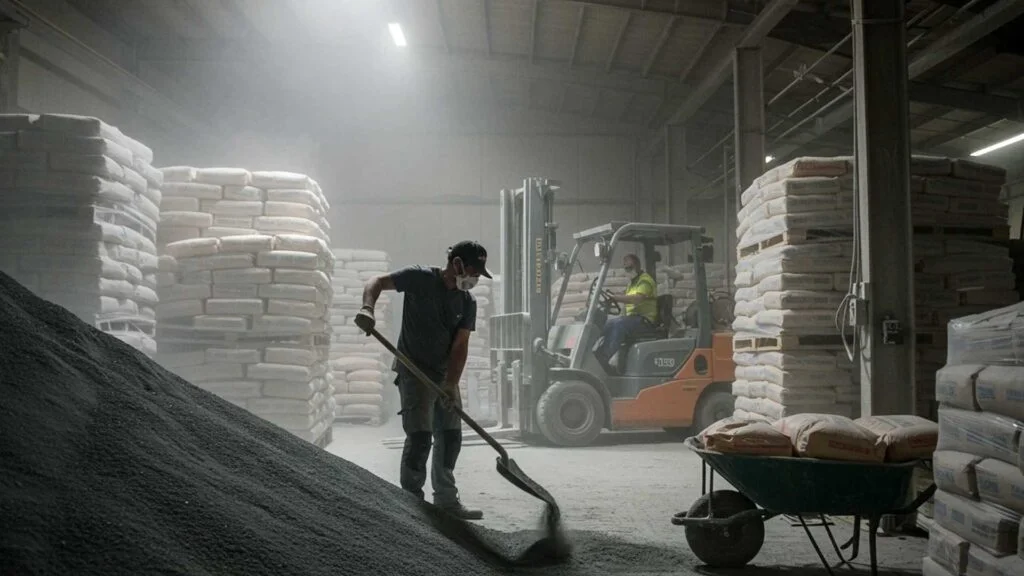
Forklift sensors often fail in dusty warehouses because dust accumulates on laser scanners, cameras, ultrasonic sensors, and electronic components, causing false alarms, inaccurate readings, and unexpected system shutdowns.
The problem is especially severe in: - Cement plants - Lumber yards - Fertilizer factories - Stone processing facilities - Mining and aggregate operations
Modern forklifts increasingly rely on: - Collision avoidance radar - Cameras - Load weighing systems - AGV navigation sensors - Safety scanners - Electronic control units
These technologies work well in clean warehouses, but in dusty industrial environments, sensor contamination becomes a major operational problem.
Common symptoms include: - Frequent false collision warnings - AGV navigation errors - Load weight inaccuracies - Sudden speed reduction - Unexpected emergency stops - Intermittent fault codes
In many facilities, the forklift itself is not defective. The real issue is that dust is interfering with the sensor systems.
Why Forklift Sensors Fail in Dusty Warehouses
Why Dust Is Such a Serious Problem for Modern Forklifts
Traditional forklifts relied mainly on mechanical and hydraulic systems.
Today’s forklifts use: - Laser scanners - Cameras - Ultrasonic sensors - Electronic weighing systems - CAN bus networks - Advanced safety controllers
These systems require clean sensor surfaces and stable electronic signals.
Dust creates problems by: - Blocking sensor signals - Reflecting laser beams incorrectly - Covering camera lenses - Entering electrical connectors - Causing overheating in electronic components
As forklift technology becomes more sophisticated, dust-related failures become more common.
Laser Sensor Contamination Is the Most Common Failure
Many modern forklifts use laser scanners for: - Collision avoidance - AGV navigation - Distance measurement - Pedestrian detection
In dusty environments: - Fine particles accumulate on the scanner window - Laser beams become distorted - Reflection quality decreases
This can cause: - False obstacle detection - Navigation errors - Unexpected stopping - Reduced travel speed
In AGV or semi-automated forklifts, even a thin layer of cement or wood dust can significantly affect performance.
Camera Systems Frequently Misidentify Objects
Forklift camera systems are increasingly used for: - Fork positioning - Pedestrian detection - Blind-spot monitoring - AI-based safety systems
Dust on the camera lens reduces image clarity and contrast.
In environments such as: - Sawmills - Cement plants - Stone factories
cameras may begin: - Misidentifying pallets - Missing obstacles - Triggering false safety alarms
Poor lighting combined with dust makes the problem even worse.
Ultrasonic Sensors Can Produce False Readings
Ultrasonic sensors are commonly used for: - Obstacle detection - Parking assistance - Proximity warnings
Heavy dust can: - Absorb sound waves - Scatter ultrasonic signals - Create inconsistent distance readings
Operators may experience: - Random warning alarms - Sudden speed reductions - Intermittent sensor faults
This is particularly common in warehouses with airborne powder or fine particulate material.
Dust Causes Problems Inside Electronic Control Systems
Dust does not only affect external sensors.
Fine particles can enter: - Electrical cabinets - Connectors - Control modules - Cooling vents
Over time, this may lead to: - Corrosion - Short circuits - Overheating - Communication errors
Fertilizer and chemical facilities are especially challenging because dust may be both conductive and corrosive.
Load Weighing Systems Become Inaccurate
Many forklifts now include onboard weighing systems.
Dust accumulation around: - Load cells - Hydraulic pressure sensors - Mechanical linkages
can affect measurement accuracy.
Common symptoms include: - Incorrect weight readings - Unstable weight display - Calibration drift - Overload warnings when loads are normal
For industries that rely on precise pallet weights, this can create serious operational issues.
AGV and Autonomous Forklifts Are Even More Vulnerable
Automated forklifts depend heavily on sensors for navigation.
Dust can interfere with: - LiDAR systems - Reflective markers - Vision-based navigation - Floor guidance systems
In dusty warehouses, AGVs may: - Lose position accuracy - Stop unexpectedly - Take incorrect routes - Require frequent manual intervention
This is one reason why some AGV projects struggle in heavy industrial environments.
Why Cement, Wood, and Stone Facilities Are Especially Difficult
Cement Plants Cement dust is extremely fine and easily coats optical surfaces.
Lumber Yards Wood dust combines with moisture and creates sticky deposits on sensors.
Fertilizer Factories Fertilizer dust can be corrosive and damage electrical components.
Stone Processing Facilities Stone dust is abrasive and can scratch sensor windows and camera lenses.
Each environment creates different failure mechanisms, but all increase sensor maintenance requirements.
Signs Your Forklift Sensors Are Being Affected by Dust
Common warning signs include: - Frequent collision alarms with no obstacle present - AGV route interruptions - Camera image quality deterioration - Random ultrasonic warnings - Intermittent communication faults - Weight measurement inconsistencies - Increased electronic fault codes
If these problems occur more often in dusty areas of the warehouse, sensor contamination is a likely cause.
How to Reduce Dust-Related Sensor Failures
Clean Sensors Regularly
Establish a cleaning schedule for: - Laser scanner windows - Camera lenses - Ultrasonic sensor surfaces - Reflective targets
Use Protective Covers
Many industrial sensor systems offer: - Dust shields - Air-purge systems - Protective housings
These can significantly extend sensor reliability.
Improve Warehouse Dust Control
Where possible: - Use dust extraction systems - Improve ventilation - Reduce airborne particulate levels - Clean travel routes frequently
Inspect Electrical Connectors
Check for: - Dust buildup - Corrosion - Loose connections - Moisture contamination
Preventive inspection is often cheaper than sensor replacement.
Choose Equipment Designed for Harsh Environments
Some forklift models offer: - Higher IP-rated sensors - Sealed electronic compartments - Industrial-grade optical systems
These are better suited for cement, wood, fertilizer, and stone facilities.
Why This Problem Is Growing
Forklifts are becoming increasingly dependent on electronic sensing systems.
As warehouses adopt: - Advanced safety systems - AGV technology - AI-based vision systems - Automated navigation
dust-related sensor problems are becoming more important than ever.
Facilities that were once able to operate with purely mechanical forklifts now require a much higher level of sensor maintenance and environmental control.
Conclusion
Forklift sensors fail in dusty warehouses because dust interferes with laser scanners, cameras, ultrasonic sensors, weighing systems, and electronic control components.
The problem is particularly severe in: - Cement plants - Lumber yards - Fertilizer factories - Stone processing facilities
Common consequences include: - False alarms - Navigation errors - Weight inaccuracies - Unexpected shutdowns - Increased maintenance costs
As forklifts become more automated and sensor-dependent, dust management and sensor maintenance will become critical factors in warehouse reliability and productivity.