In the world of material handling, the terms 'Boom Forklift' and 'Telehandler' are often used interchangeably, but using the wrong machine can lead to expensive project delays, safety violations, or even catastrophic equipment failure.
While both machines use a boom to lift loads, their mechanical DNA, stability profiles, and operational costs are worlds apart. This guide breaks down the five critical differences you must understand before renting or purchasing your next lift.
1. Vertical Power vs Horizontal Reach
The most fundamental difference lies in the Axis of Movement.
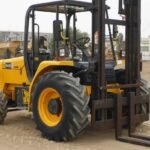
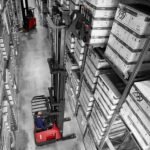
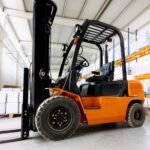
Industrial Boom Forklifts: These are typically heavy-duty counterbalance forklifts equipped with a fixed or slightly adjustable boom attachment. They are designed for Vertical Power. They excel at lifting massive, compact loads (like industrial machinery or steel coils) straight up and down in tight factory settings.
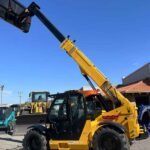
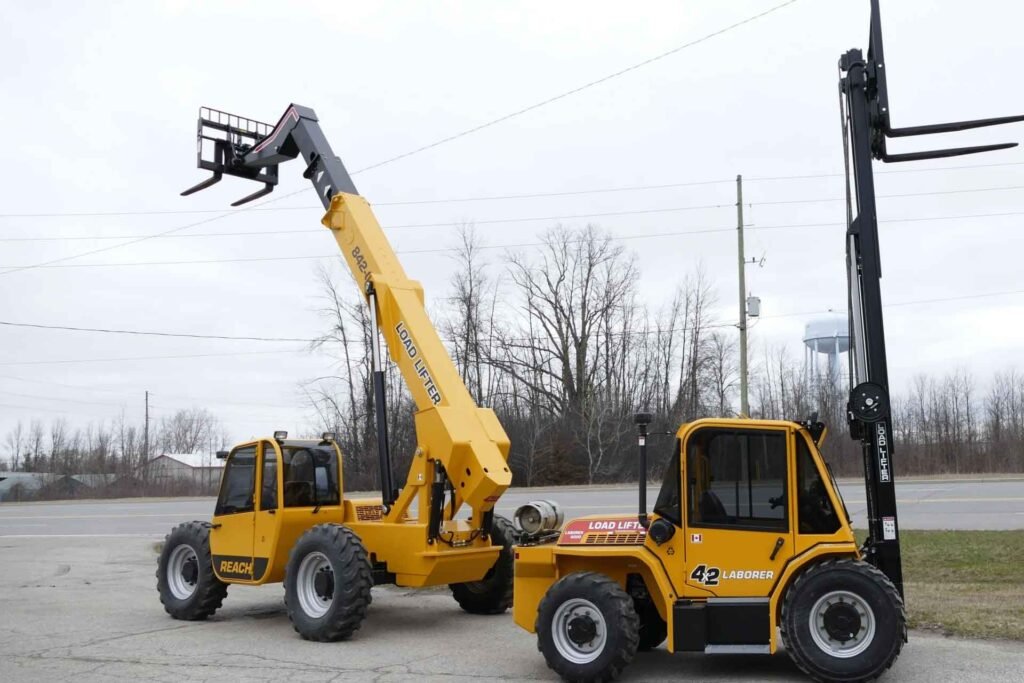
Telehandlers (Telescopic Handlers): These are engineered for Horizontal Reach. With a multi-stage telescopic boom, a telehandler can pick up a pallet and extend it forward across a ditch, or up to the third story of a building.
The Takeaway: If you need to place a load over an obstacle, you need a Telehandler. If you are lifting heavy equipment in a warehouse with a flat concrete floor, a Boom Forklift is more efficient.
2. The 'Leverage Trap': Understanding Load Charts
This is where safety meets physics. A standard forklift has a relatively stable capacity because the center of gravity stays near the drive tires.
Telehandlers operate on a 'Sliding Scale' of capacity:
A machine rated for 10,000 lbs at its base might only be safe for 2,000 lbs when the boom is fully extended.
The Increment Factor: Every foot of forward reach exponentially increases the leverage against the rear counterweight.
Pro Tip: Always audit the Load Chart inside the cab. Industrial Boom Forklifts have much simpler stability triangles, making them safer for high-tonnage indoor lifts where overhead clearance is limited.
3. Steering Modes and Terrain Adaptability
Where do you plan to drive? The chassis design determines your 'Floor' limits.
| Feature | Industrial Boom Forklift | Telehandler |
| Tires | Solid or Cushion (Non-marking) | Large Pneumatic / Foam-Filled (Rough Terrain) |
| Steering | 2-Wheel Rear Steer | 4-Wheel, Crab, and Coordinated Steer |
| Ground Clearance | Low (3–6 inches) | High (15–20 inches) |
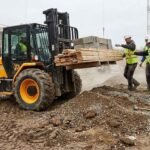
Telehandlers are almost always Rough Terrain (RT) machines. Their 4-wheel 'Crab Steering' allows them to shimmy sideways into tight spots on muddy construction sites. An Industrial Boom Forklift will get 'beached' or stuck the moment it leaves a paved surface.
4. Attachment Versatility: The 'Swiss Army Knife' Factor
An Industrial Boom Forklift is usually a 'one-trick pony'—it lifts heavy things with a hook or forks.
A Telehandler is a Multi-Tool:
Forks: For standard pallet work.
Buckets: For moving gravel or cleaning up site debris.
Work Platforms: For lifting personnel (requires specific safety compliance).
Jibs/Hooks: Turning the machine into a mobile crane.
If your job site requires one machine to do the work of three, the Telehandler offers a much higher Utilization Rate.
5. Total Cost of Ownership (TCO) and Maintenance
From a financial perspective, the 'richer' features of a Telehandler come at a price.
Maintenance: Telehandlers have complex hydraulic synchronization systems for the multi-stage booms and 4-wheel drive assemblies. Maintenance costs are typically 25-40% higher than industrial forklifts.
Insurance & Certification: Operating a Telehandler often requires a different class of certification (Class 7) and carries higher insurance premiums due to the risks associated with high-altitude reach and tip-overs.
Resale Value: Telehandlers hold their value exceptionally well in the used market because they are the 'backbone' of the construction industry.
Boom Forklift vs Telehandler
Summary: Which One Do You Need?
Choose a Boom Forklift If:
You are working on level, indoor concrete floors.
You need to install or move heavy factory machinery.
You have limited overhead clearance where a high-profile Telehandler can't fit.
Choose a Telehandler If:
You are working on unfinished, muddy, or sloped terrain.
You need to deliver materials to elevated scaffolding or rooftops.
You need one machine to perform multiple roles (forklift, loader, and crane).
🔧 Expert Support from Maoxiang
Choosing the right machine is only half the battle; maintaining its hydraulic integrity is the other. High-reach equipment like Telehandlers puts extreme stress on Hydraulic Cylinders and Seal Kits.
At Maoxiang, we specialize in the engineering behind the lift. Whether you are operating a fleet of warehouse electric forklifts or heavy-duty reach equipment, our industrial-grade seal kits and precision hydraulic components ensure that your boom stays up when the pressure is on.
Need a technical consultation on your hydraulic system? Contact our engineering team today.